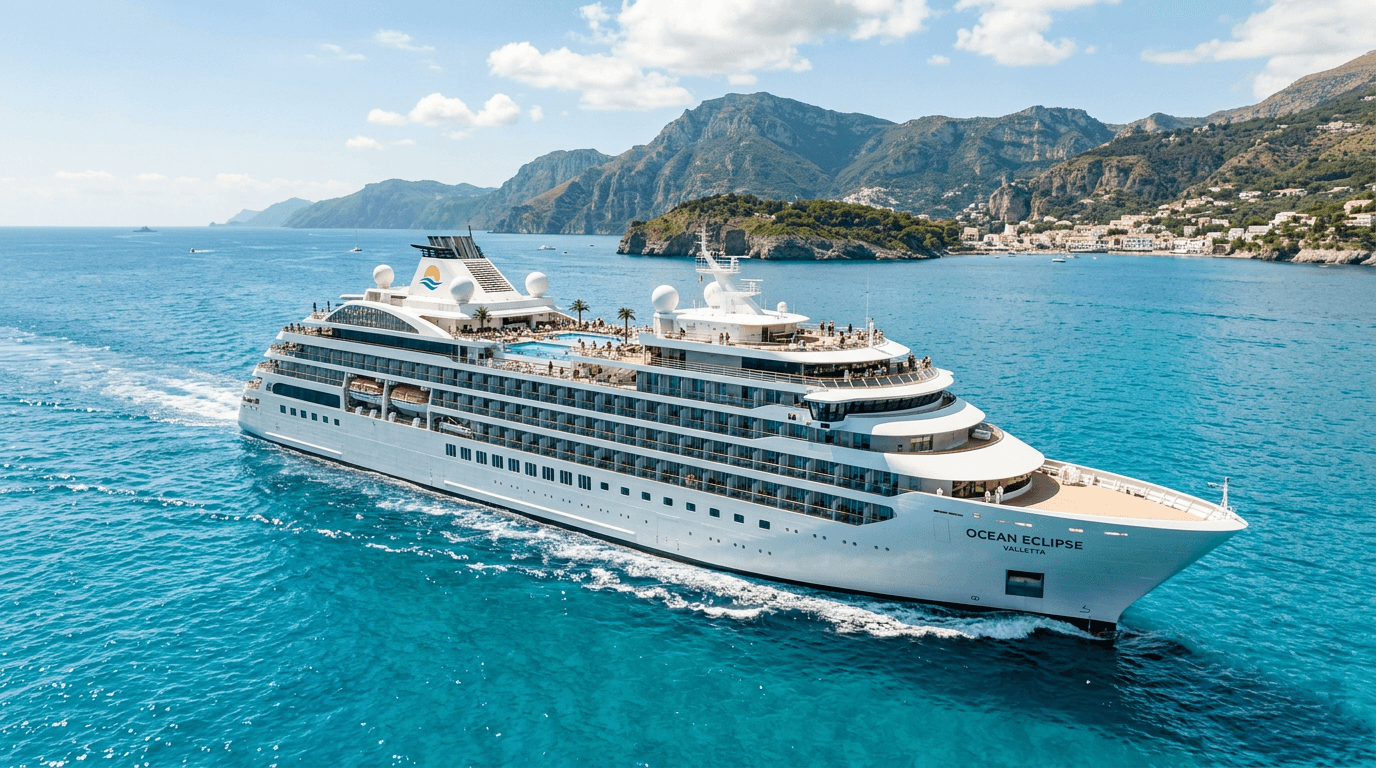
Say the word “cruise” and most people picture the same thing: a floating city of 6,000 strangers, fluorescent buffet lines, and a packed pool deck somewhere in the Caribbean. It's a fair image — that version of cruising has been the default for decades. But it's no longer the only version. Not even close.
If your mental image of cruising involves shuffleboard tournaments, fluorescent-lit buffets, and a ship carrying 6,000 passengers through the same five Caribbean ports, I understand the hesitation. That version of cruising absolutely still exists. But a parallel universe has emerged — one where the ship is a floating boutique hotel, the guest count is intimate, the cuisine rivals top restaurants on land, and the itineraries reach places most travelers never think to visit.
This isn't a minor upgrade. It's a completely different category of travel.
The Old Model vs. The New Standard
Mass-market cruise lines optimize for one thing: volume. More passengers, more revenue per sailing, more onboard upsells. Your cabin is a glorified closet. The dining room seats 1,500. Shore excursions funnel everyone onto the same bus to the same souvenir shop. The experience is designed around efficiency, not discovery.
Modern luxury lines have flipped this entirely. They optimize for space, quality, and genuine experience. The differences show up everywhere — from the moment you board to the way you step off in port. Fewer guests means the pool isn't a zoo. Included dining means no nickel-and-diming for a decent meal. And itineraries that favor overnight stays in port mean you actually experience the destination instead of sprinting through it in four hours.
Think of it this way: the old model is a theme park. The new model is a private villa that happens to move.
Explora Journeys: The Line That Changed My Mind
I'll be transparent about my bias here. After years of working with every major cruise line, Explora Journeys is the brand I recommend most often to clients who think they don't like cruising. It was built from the ground up by the Aponte family (founders of MSC, the world's largest private shipping company) with one goal: create the most refined ocean travel experience in the world.
A few things that set Explora apart:
- Every cabin is a suite with an ocean-facing terrace. Not a balcony tacked onto a standard room — a proper terrace with space to have dinner outside, watch a sunset, or simply exist without feeling boxed in.
- 922 guests maximum. Compare that to the industry average of 3,000–6,000. The ship feels calm, uncrowded, and personal. You won't fight for a lounger by the pool or wait in a 45-minute line for dinner.
- Truly all-inclusive. Fine dining across multiple restaurants, premium wines and spirits, Wi-Fi, gratuities, fitness classes — it's all built into the fare. No surprise charges on your folio at the end of the trip.
- A 1:1.25 staff-to-guest ratio. That number matters more than any marketing brochure. It means your server remembers your name, your coffee order, and that you prefer sparkling water without ice.
- European design sensibility. The interiors were done by De Jorio Design International and draw from Italian modernism — think warm woods, natural stone, and quiet elegance. There's not a neon sign or casino carpet in sight.
When every detail is designed with intention, you stop noticing the ship entirely. You just feel at ease.
What Actually Makes a Cruise “Luxury”?
Every cruise line with a price tag above economy calls itself luxury. The word has been diluted to meaninglessness. So here's what I actually look at when evaluating whether a line delivers on the promise:
Staff-to-guest ratio. This is the single most reliable predictor of your experience. Below 1:1.5, you feel taken care of. Above that, you're just another guest. The best luxury lines — Explora, Regent, Silversea — hover around 1:1 to 1:1.3. It's the difference between asking for something and having it anticipated.
Cuisine that stands on its own. A luxury cruise should have restaurants you'd book even if they were on land. I'm talking dedicated pastry chefs, sommeliers with real depth of knowledge, and menus that change daily based on what's available in port. Explora's six dining venues — including a Japanese restaurant helmed by a specialist culinary team and an Italian concept that would hold its own in Rome — are examples of this done right.
Itinerary intelligence. Mass-market ships follow the most popular routes because they need to fill 5,000 cabins. Luxury lines can go smaller — docking at ports the big ships physically can't reach. Overnight stays that let you experience a city after dark. Longer port calls so you can actually sit down for a leisurely lunch instead of racing back to the gangway.
Space per guest. This is measured in Gross Registered Tonnage (GRT) per passenger. The higher the number, the more spacious the ship feels. A typical mass-market ship averages 30–35 GRT per passenger. Explora Journeys comes in at roughly 75 GRT per passenger. You feel that difference in every corridor, every lounge, every moment.
Other Lines Worth Knowing
Explora isn't the only player in this space, and the right line depends on what you value most. Here's how I think about the landscape:
Regent Seven Seas is the gold standard if you want everything included from the start — business-class airfare, pre-cruise hotel stays, unlimited shore excursions, premium spirits. The suites are among the largest at sea. It's ideal for travelers who want to think about absolutely nothing once they book.
Silversea appeals to the explorer. Their expedition ships reach Antarctica, the Galapagos, and the Arctic with the polish of a luxury cruise and the soul of an adventure. If you've done Europe and want something completely different, Silversea's expedition fleet is extraordinary.
Seabourn hits a sweet spot between intimacy and value. Their ships carry around 450–600 guests, the service culture is warm rather than formal, and their partnership with culinary legend Thomas Keller gives the dining program real credibility.
The point isn't that one line is best. It's that the right line depends entirely on who you are, what you want, and where you want to go. Getting that match wrong is how people end up thinking they “don't like cruising.”
Who Is Luxury Cruising Actually For?
I recommend luxury cruising most often to three types of travelers:
The multi-destination dreamer. You want to see the Amalfi Coast, Dubrovnik, and the Greek Islands in one trip but the thought of packing and unpacking at four different hotels sounds exhausting. A cruise eliminates the logistics while keeping the variety. Your hotel follows you.
The couple that can't agree. One of you wants to lie by the pool. The other wants to explore a medieval town. A luxury cruise gives you both, every single day, without compromise. This might be the most underrated benefit.
The experience collector. You've done the safari. You've done the overwater bungalow. You've done the European villa. A luxury voyage to Japan, Iceland, or along the coast of West Africa offers something genuinely new — and the ship becomes part of the experience rather than just a vehicle.
Why the Right Cabin on the Right Ship Matters More Than You Think
Here's where I earn my keep. Booking a cruise online looks simple — pick a date, pick a category, enter your credit card. But the cabin you choose can make or break the trip.
Midship cabins on lower decks have less motion — essential if either of you is prone to seasickness. Forward-facing suites on Explora offer dramatic wake-up views but more movement at sea. Some cabins sit directly below the pool deck (noisy at 7 AM). Others are near the engine room. The deck plan is a puzzle, and most booking engines don't tell you what the pieces mean.
Then there's the itinerary. A Mediterranean cruise in August is a fundamentally different experience from the same route in May. Port schedules change by season. Some routes include overnight calls that let you have dinner on shore; others dock at dawn and leave by sunset. These details shape your entire trip, and they're easy to miss if you're clicking through options on a screen.
As a Virtuoso advisor, I also have access to exclusive perks that aren't available when booking direct — onboard credits, complimentary excursions, cabin upgrades, and sometimes early access to new itineraries before they go public. The price you pay is often the same or better than what you'd find online, but you get more.
The Real Shift
What's happening in cruising right now mirrors what happened in hotels a decade ago. Boutique properties proved that travelers would pay more for design, personality, and genuine hospitality over cookie-cutter rooms and massive lobbies. The same revolution is happening at sea.
The travelers who dismiss cruising outright are usually the ones who've only seen the mass-market version — or, worse, who went on the wrong ship for them. Once someone experiences the right luxury line, the reaction is almost always the same: “I had no idea cruising could feel like this.” And then they book again.
If you've been dismissing cruising, you might just be dismissing the wrong version of it. Let's find the right one. I'd love to walk you through what's out there and match you with a voyage that might genuinely surprise you — the way it surprised me.